What Is Salmagundi? The Pirate Feast Behind the Name
November 16, 2026
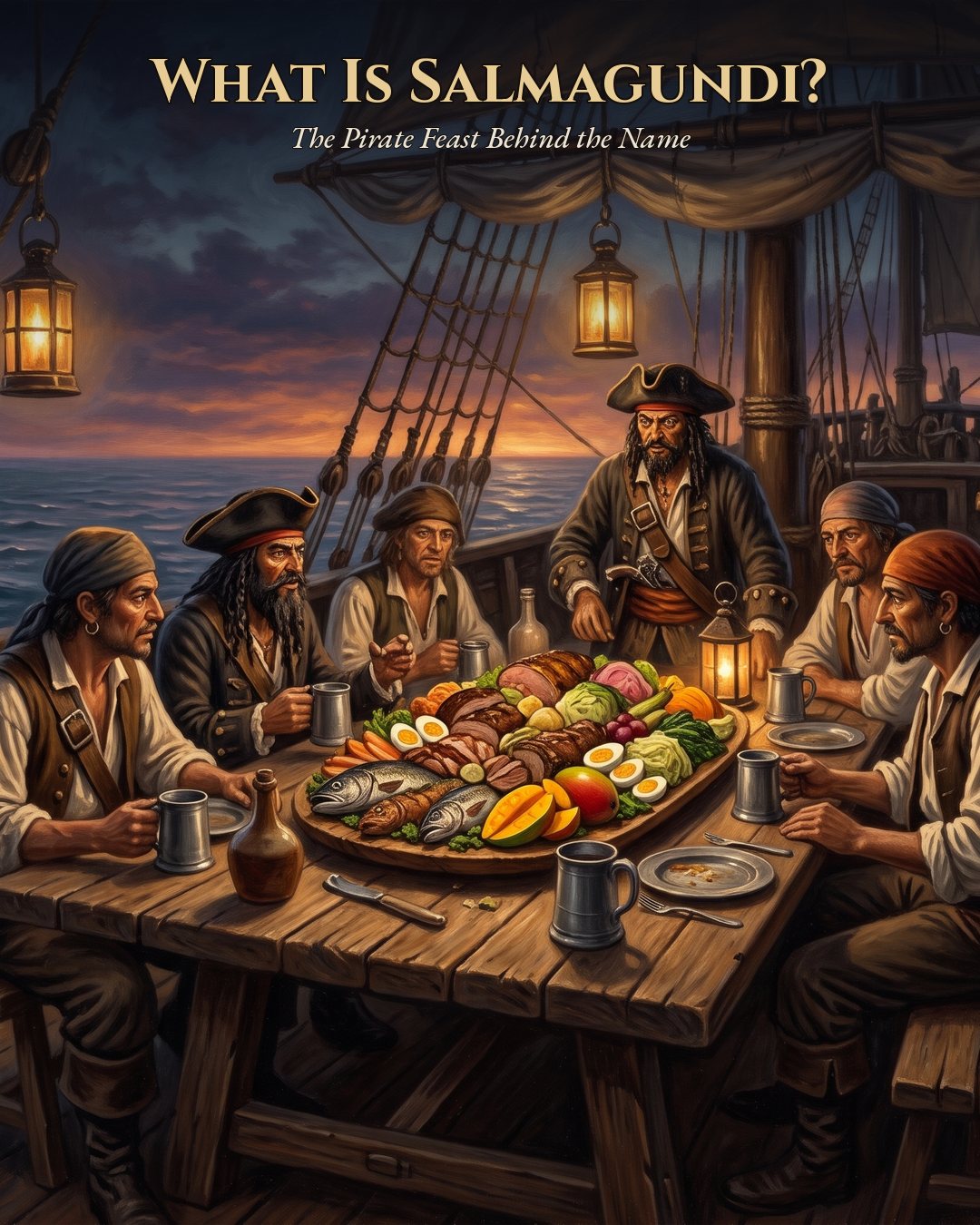
Ask anybody what pirates ate and you'll hear the same two answers. Hard biscuits and rum.
But the dish most tied to pirates is something much better. It's a giant salad called salmagundi.
What is salmagundi?
Salmagundi is a big platter of mixed foods. Cooked meats, fish, eggs, vegetables, pickles and fruit are laid out together, then dressed with oil, vinegar and spices.
There's no one right recipe. You use what you have. That's the whole point.
Where does the word salmagundi come from?
The word comes from an old French word, salmigondis. It means a hodgepodge, a jumble of things thrown together.
English cooks picked it up in the 1600s, and English cookbooks were printing salmagundi recipes by the early 1700s.
The word got so popular it started meaning any mix of things. In 1807, a young Washington Irving and his friends put out a funny magazine and named it Salmagundi, because it was a little bit of everything.
Did pirates really eat salmagundi?
Yes. It's one of the dishes pirate historians link most often to pirates and sailors of the 1600s and 1700s.
In his 1997 book Pirates and Piracy, historian David Reinhardt lists what could go into a pirate salmagundi:
- Roasted and pickled meats, like turtle, pork and pigeon
- Fish, anchovies and pickled herring
- Cabbage, mangoes and hard-boiled eggs
- Mustard seed, oil and vinegar to pull it all together
Why did salmagundi make sense on a pirate ship?
Life at sea was hard on food. There was no fridge and no grocery store. Fresh food went bad fast.
Pickled and salted foods lasted, so they were always on board. When a crew took a ship or came ashore, they suddenly had fresh meat, fruit and greens. So the cook threw the best of everything onto one platter and the whole crew ate together.
Some historians think the strong vinegar and spices had a second job. They covered up food that was starting to turn. Not glamorous, but it kept a hungry crew fed.
How do you make salmagundi today?
You don't need a pirate ship. You need a big platter and whatever's in your fridge. Here's a simple way to build one:
- Start with greens. Lettuce, cabbage or spinach on the bottom.
- Add meats. Roast chicken, ham, turkey or steak, sliced.
- Add something from the sea. Anchovies, shrimp, smoked fish or sardines.
- Add eggs. Hard-boiled and cut in halves or quarters.
- Add the sour stuff. Pickles, olives, pickled onions or capers.
- Add fruit. Grapes, orange slices or mango.
- Dress it. Oil, vinegar, a little mustard, salt and pepper.
Old recipes often lay everything out in rings or rows so the platter looks like a feast. Make it as fancy or as messy as you want.
Why is salmagundi a good Thanksgiving idea?
Because it's built for leftovers. That turkey, ham and those extra sides all belong on a salmagundi platter.
And it carries the same idea as Thanksgiving. Everybody brings what they have, it all goes on one table, and nobody eats alone.
Quick answers
What is salmagundi? A large platter of mixed meats, fish, eggs, vegetables, pickles and fruit, dressed with oil and vinegar.
What does salmagundi mean? It comes from the French word salmigondis, which means a hodgepodge or mixture.
Did pirates eat salmagundi? Yes. It's one of the dishes most linked to pirates and sailors of the 1600s and 1700s, made from whatever the ship had on hand.
How do you make salmagundi? Layer greens, sliced meats, seafood, hard-boiled eggs, pickles and fruit on a platter, then dress it with oil, vinegar and mustard.
Our members are sharing their own salmagundi on Saturday, November 28. See the night here.
Get the Monthly Letter
Once a month: the new Cigar and Coffee of the Month, member nights and lounge news. No spam, and you can leave anytime.